November 13, 2025. Commemorate, or keep looking away?
Ten years since Paris froze in horror. Ten years since French citizens were gunned down on a terrace, in a concert hall, in the streets of their own country.
Ten years.
Ten years since Paris froze in horror.
Ten years since French citizens were gunned down on a terrace, in a concert hall, in the streets of their own country.
Ten years since the State promised "never again."
And ten years on, we gather in silence. We light candles. We post flags.
We talk about resilience. We quote Camus. We lay down flowers.
But what good is memory if we refuse to face reality?
What good is national mourning if, day after day, we betray it in our actions?
The truth is that we commemorate without knowing.
And perhaps without wanting to know.
Because ten years on, not all the information is public yet.
Where are the full audio recordings of the attacks?
Where are the first accounts from the RAID officers?
Where are the command decisions, the orders given, the mistakes made, the absurd delays?
Why is a people asked to have trust denied access to the full truth?
We are told about resilience. But there is no resilience without truth.
There is no truth without transparency.
And there is no democracy without a minimum of courage to say what unsettles.
Today, in certain media outlets, the preference is to explain that the real danger in prison is "the ultra-right".
104 people out of 80,000 inmates.
Meanwhile, Salah Abdeslam, a central figure in the November 13 attacks, was taken into custody for the suspicious possession of a USB drive. An ongoing investigation into the organization of a terrorist attack.
But no major outrage, because now he wants to reconcile.
The problem is not forgetting. It is the sorting.
We select the acceptable memories.
We smother the ones that unsettle.
Memory becomes narrative.
We sculpt it. We shape it. We make it conform.
And what we don't want to hear... we classify as "secret," or we bury it in silence.
That is how you kill memory, a second time.
Not through violence. Through comfort.
Because to commemorate is not to weep on a fixed date.
It is to have the honesty to acknowledge the failures.
It is to ask why certain alerts were not taken seriously.
It is to question the chain of command.
It is to say that intelligence tools are not enough if the political decisions are murky or hesitant.
To commemorate is to remember the facts.
Not to rewrite them to satisfy the dominant ideology.
Memory is not an editorial opportunity. It is a moral duty.
And that duty comes down to a simple question:
What is information still worth, when it no longer has any value?
When the press becomes a mouthpiece for spin doctors,
When alerts are filtered through the political lens,
When hashtags are preferred to rigor,
When we speak of "resilience" so as not to say "surrender,"
then there is not much left.
We commemorate the dead with the same mouth that excuses the living who killed them.
The French are told they must watch one another, while what protects is disarmed, and what informs is exploited.
This November 13, I am not here to write a tribute.
Everything has already been said.
But what has not yet been said is how far this society chooses to forget what it does not want to see.
Terrorism is not just an event. It is an ideology.
And when an ideology kills 130 people in a single night,
you do not respond with op-eds about living together.
You protect. You act. You name. You draw a line.
A people's security is not an adjustment variable.
It is a foundation. A backbone.
And today, that backbone is cracked.
We talk about a "surveilled" society, but we are afraid to surveil those who represent a real threat.
We deploy intrusive tools for the ordinary citizen, but we let individuals flagged as security risks move about, study, sometimes even... become a member of parliament.
While the French are checked over a video on social media or an account on X, others still have room to maneuver.
And the State looks away.
Worse: the skeptics are accused of being extremists.
But what is extreme is to rewrite history as it cools.
What is extreme is to treat those who ask questions as troublemakers.
What is extreme is to lack the courage to say what everyone sees.
Because to commemorate is also to remember the value of information.
And when information becomes suspect, when it is filtered, scripted, commodified... then an entire country falls out with itself.
The truth is not comfortable. But it is necessary.
And if France wants to be strong, it must be clear-eyed.
And if it wants to be worthy, it must honor its dead through honesty, not through storytelling.
The only real taboo is to demand clarity.
To ask our institutions to show discernment.
To expect from our media something other than a copy-paste of wire reports.
To hope that a President understands that the threat does not come from a tweet, but from everything he refuses to face.
The truth is that ten years on, the veneer is cracking.
Society is more distrustful, more divided, more fragile.
And by endlessly confusing security with surveillance, information with communications, we deepen our own vulnerability.
To commemorate is also to remember what a clear-eyed country is.
A country capable of saying: never again, and of meaning it.
Today, November 13, 2025, it is not only about remembering. It is about having the courage to ask the one question that matters:
Why do we still refuse to say everything?
And until we have that answer, all the ceremonies in the world will change nothing.
Questions fréquentes
What is the central argument of this text?
That commemorating November 13 without access to the full truth amounts to sustaining a memory of appearances; the duty of remembrance requires transparency, honesty, and acknowledgment of the failures.
What does the author fault in the media and institutional response?
He denounces a press turned mouthpiece for spin doctors, alerts filtered through a political lens, and a State that rewrites or buries what unsettles rather than confronting the facts.
What security imbalance does the author point to?
In his view, intrusive tools are deployed against the ordinary citizen, checked over a video or a social media account, while individuals who represent a real threat are left room to maneuver.
Is this a tribute?
No: the author makes clear that he is not writing a tribute, but an op-ed calling for the courage to ask the question that matters: why do we still refuse to say everything?
L’auteur
Christophe MazzolaJ’écris sur la cybersécurité telle qu’elle se vit vraiment : gouvernance, facteur humain, et tout ce que les rapports d’audit n’osent pas dire au COMEX. Auteur de « Être en cybersécurité ».
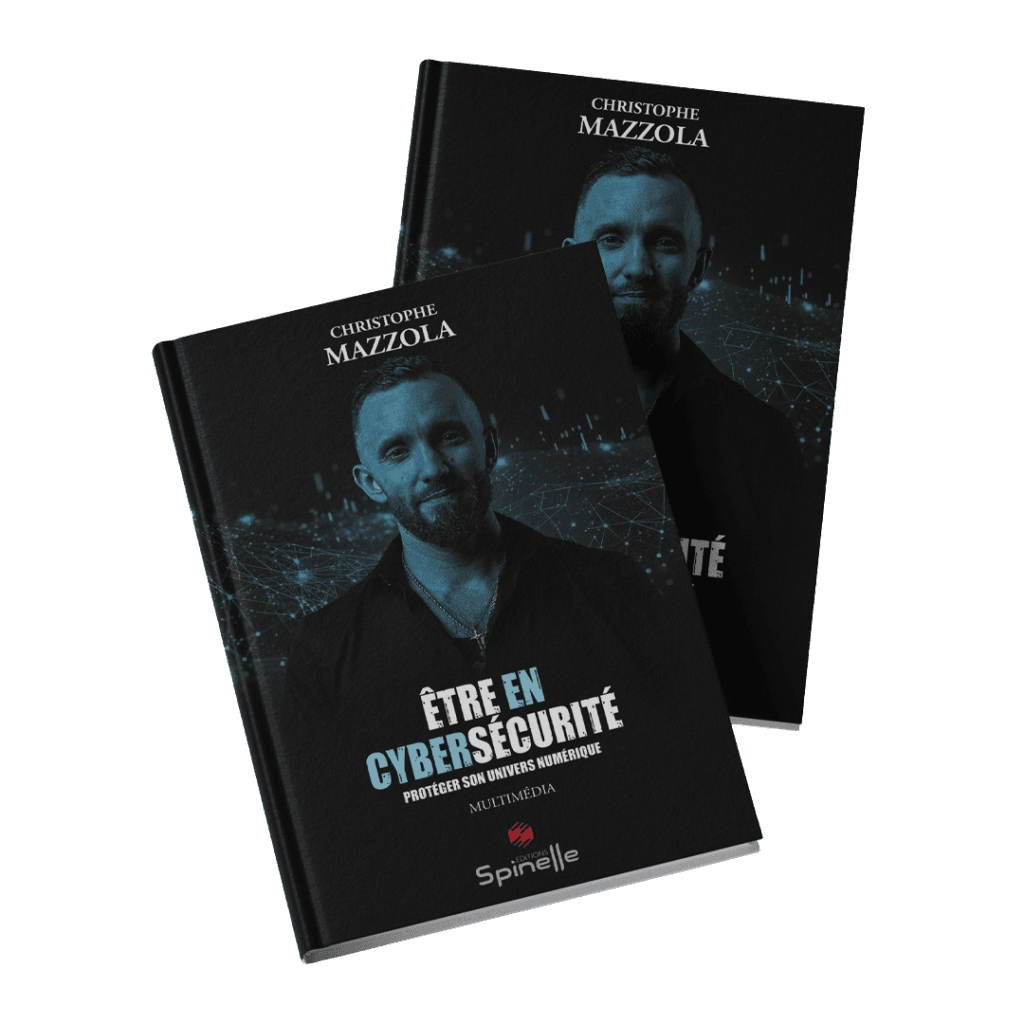
Être en cybersécurité
Une feuille de route cyber en clair, pour tout le monde, pas seulement les experts.