Amine Kessaci: a cry from the heart of the northern districts, a call to collective conscience
In the narrow streets of Frais-Vallon, where the tarmac still seems to carry the echoes of a shared childhood, I grew up just a few metres from where Amine Kessaci was born.
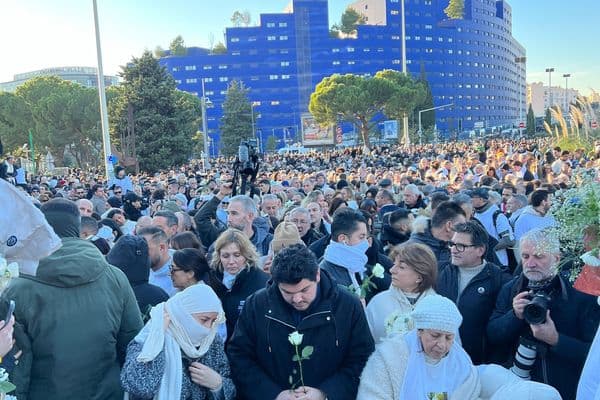
In the narrow streets of Frais-Vallon, where the tarmac still seems to carry the echoes of a shared childhood, I grew up just a few metres from where Amine Kessaci was born. The same school benches, the same stairwells, the same thick silences that wrap themselves around the northern districts of Marseille. My first brush with the drug trade came as early as Year 7, at the Jacques Prévert middle school. Not yet everywhere, but already there, just beneath the surface. In the schoolyard, in people's eyes, in the detours toward the pine wood nearby.
So when, a few weeks ago, I saw Amine's name surface in my news feed, it was more than a headline. It was a reminder. Brutal. Physical.
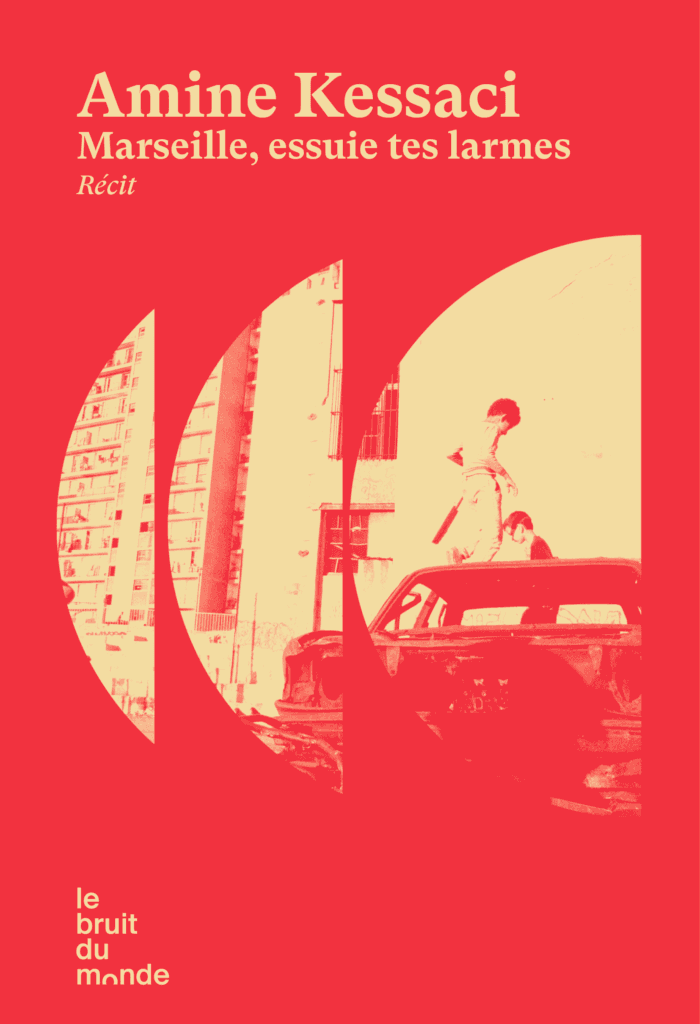
I first heard of Amine just before his book came out, Marseille, essuie tes larmes. The title grabbed me. I ordered it, I read it over a few evenings. It was raw, unvarnished, and clear-eyed in a way that unsettles. Not a manifesto of the moment, but a precise dissection of what drug trafficking does to a city, to a generation, to a family. You could feel this was no pose: it was a cry.
I had told myself I would write to him. That I would take the time to say thank you, simply, for what he had set down in black and white.
And then Mehdi was murdered. Twenty years old. In broad daylight. Like a hammer blow.
So no, I did not write to him. Because in moments like that, you feel almost like an intruder. You do not dare disturb the silence of a grief that cuts you to the bone. Because sometimes there are pains you honour by stepping back. But that step aside takes nothing away from the admiration.
Today, I am making up for it as best I can. With these words.
A visceral fight, carried to the last breath
Amine is no "armchair activist". Born in 2003, he belongs to that generation that refuses to give up. In 2020, he created the Association Conscience, to raise the alarm about the grip of drug trafficking and the silent damage it inflicts on our neighbourhoods. His book is not a theoretical essay: it is a mapping of the real, a cry of urgency sent up from the belly of the city.
He speaks of the tower blocks of Frais-Vallon not as a backdrop of misery, but as witnesses to abandonment. An absent State. Fractured families. Young lives sacrificed in a system where violence is promoted as the only way up.
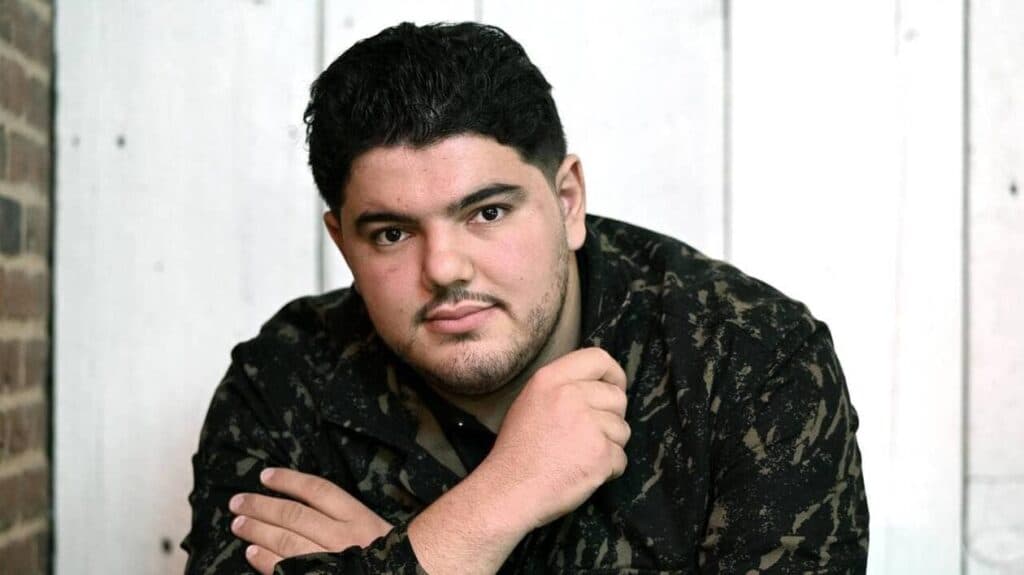
"I will not stay silent"
After Mehdi's death (described as a "crime d'avertissement" by investigators) Amine held firm. Despite the pain, despite the threats. He declared:
"No, I will not stay silent. I will say and say again that my brother Mehdi died for nothing. I will speak of the violence of drug trafficking."
His words carried beyond the walls. The European Parliament heard them. On 24 November, President Roberta Metsola paid tribute to him in the chamber.
But in the French media? Silence.
On social networks? Silence.
Among those who claim to speak "in the name of the neighbourhoods"? A guilty muteness.
Culture of silence, or culture of denial?
This silence is all the more unbearable because it sometimes comes from those who, through posturing or strategy, help to normalise the unspeakable.
We glorify an imagined version of the neighbourhoods where making do flirts with danger, where the "business" becomes folklore. Cultural figures, local or national, adopt a rhetoric that glorifies the illegal, without ever owning the consequences. We romanticise violence, we stylise the deal, we celebrate transgression.
Meanwhile, the bodies fall.
And families bury their children.
Amine, for his part, refuses this logic. In his book, he speaks of the stories that ensnare, of the role models that trap. He calls for smashing the distorting mirror, for taking back control of the imagination.
And it has to be said: to this day, no major media, cultural or sporting figure has publicly taken a stand after Mehdi's death.
Not a word. Not a line. Nothing.
Outrage of variable geometry
This silence is not only cultural. It is also political.
Yes, elected officials were there, at the silent march of 22 November. Yes, words were spoken. But behind the slogans, what remains? Weak policies, PR stunts, "neighbourhood plans" that change their name every three years but never their substance.
Amine does not mince his words:
"The State must acknowledge the failure of its actions."
And he is right. Because by dint of tolerating the intolerable, of talking about "risk reduction" without talking about reducing the networks, we create the conditions for these tragedies.
"Marseille, essuie tes larmes."
It is not just a turn of phrase. It is a testament.
A call for this city to stop accepting the unacceptable.
Not looking away
I am not a distant observer. I am a child of these streets.
And as in cybersecurity, there are flaws we choose to ignore. Until it is too late.
The drug trade is a breach. A social breach. A moral breach. A political breach.
To ignore Amine Kessaci is to widen it.
To support him is to close it, word after word, action after action.
To Amine, this modest tribute.
Your book is a beacon. A beacon for those who, like us, refuse to accept fate.
Mehdi and Brahim did not die for nothing if your voice endures.
And we, children of Frais-Vallon, must keep wiping away these tears, not to resign ourselves, but to rebuild.
"Marseille, essuie tes larmes - Vivre et mourir en terre de narcotrafic"
To read. To share. To support
- Christophe Mazzola
Cybersecurity expert, author of Être en cybersécurité, born in Marseille, son of the northern districts.
Questions fréquentes
Who is Amine Kessaci?
Born in 2003 in the northern districts of Marseille, in 2020 he created the Association Conscience to raise the alarm about the grip of drug trafficking, and he is the author of the book "Marseille, essuie tes larmes".
What is the book "Marseille, essuie tes larmes" about?
It is a precise, unvarnished dissection of what drug trafficking does to a city, to a generation and to a family, read by the author as a cry of urgency rather than a theoretical essay.
What happened to Mehdi, Amine's brother?
Mehdi was murdered at twenty, in broad daylight. Investigators described the killing as a "crime d'avertissement".
What tribute did Amine Kessaci receive?
On 24 November, the President of the European Parliament Roberta Metsola paid tribute to him in the chamber, while, according to the author, the French media and social networks stayed silent.
What link does the author draw with cybersecurity?
He compares the drug trade to a flaw one chooses to ignore until it is too late: a social, moral and political breach that widens if ignored and closes if you act.
Sources & méthodologie

L’auteur
Christophe MazzolaJ’écris sur la cybersécurité telle qu’elle se vit vraiment : gouvernance, facteur humain, et tout ce que les rapports d’audit n’osent pas dire au COMEX. Auteur de « Être en cybersécurité ».

Être en cybersécurité
Une feuille de route cyber en clair, pour tout le monde, pas seulement les experts.