What If We Trained Hackers to Defend the Republic?
In France, we train engineers, lawyers, police officers, diplomats and teachers. But we still do not train, at scale, the very people already fighting the battles of the 21st century: hackers.
In France, we train engineers, lawyers, police officers, diplomats and teachers. But we still do not train, at scale, the very people already fighting the battles of the 21st century: hackers.
And yet this is precisely where part of our sovereignty, our collective resilience, and even our ability to build a digital society worthy of the name is decided.
Hackers are not the problem. They are the solution.
I have spent my career crossing paths with these atypical profiles. Some at conferences, others in informal groups, sometimes in more underground circles. Whether they work for CERTs, companies, institutions or in the shadows, they share a very particular relationship with the world: radical curiosity, an eye for detail, distrust of hierarchies, a love of the beauty hidden inside systems.
A good hacker is an artist. A composer of logic. Someone who sees what most people do not perceive. Someone who understands that a bug is not a mistake but a door.
And those doors need to be known, mapped and closed. Because while we debate in committee or in the boardroom, others are walking through them: hostile states, mafia groups, well-organized cybercriminals... they are not waiting for a ministry's green light.

Early talents, often on the margins
What worries me most is not the lack of cybersecurity skills. It is that those who naturally possess them have no official path to put them at the service of the common good.
We sometimes spot them as early as 13 or 14. They modify video games, build bots, tinker with scripts... And at that critical moment, two paths open before them: the path of recognition or the path of exclusion.
If we do not reach out to them, the cybercriminals will. They already do. Promising fun, money, a community. Sometimes simply by telling them: "We've seen you, you're gifted."
When school fails to understand these profiles, when institutions label them as "outside the norm", they end up believing they have no place. When in reality, they may be our best chance.
And I say this from experience: I was one of them. I grew up in that culture. I learned by exploring, taking things apart, testing, sometimes breaking them, to understand, never to harm. What I found in that world was a form of freedom, of power, of meaning. And later, a mission.
The United Kingdom is showing the way. What about us?
The British project "The Hacking Games", in partnership with the Co-op, has understood this well: identifying these young hackers as early as their learning phase, steering them toward careers as ethical hackers, giving them a framework and mentors, is an investment in our national security.
It is also a political answer to a social problem: giving a future to young people who are often marginalized, neuroatypical, or simply misunderstood. This is not an IT program, it is a public policy in its own right.
Why not do the same in France?
We have talent, schools, associations. We even have introductory clubs in some high schools and fablabs. But nothing structured, nothing national, nothing worthy of a true republican ambition.
What I propose
I do not settle for calling things out. Here is a concrete proposal:
Create a public program to identify, train and integrate young hackers, starting in middle school.
Tie this program to certifying pathways in cybersecurity, in collaboration with the Éducation nationale, ANSSI and the grandes écoles.
Bring together experts, ethical hackers, companies and researchers to create a national mentorship scheme, capable of passing on an ethic, a framework, a future.
Hacker culture is a form of resistance
Yes, hacker culture is subversive. It challenges the established order. It explores, it disturbs, it dares. But that is precisely why we need it.
If we want a digital Republic worthy of the name, we must bring hackers into our collective story. Not as exceptions or threats, but as pillars of a new digital humanism.
It is time to stop chasing after cyberattacks. Let us train the people who will know how to prevent them, understand them and counter them.
Before others enlist them.
Discover my appearances in the media and the press.
Questions fréquentes
Why should we train hackers to defend the Republic?
Because they are already the ones fighting the digital battles of the 21st century, and part of our sovereignty and collective resilience is at stake there. Without an official path, their skills remain unused for the common good.
What does the author propose in concrete terms?
Creating a public program to identify, train and integrate young hackers starting in middle school, tied to certifying pathways with the Éducation nationale, ANSSI and the grandes écoles, and supported by a national mentorship scheme that passes on an ethic and a framework.
Which foreign model is cited as an example?
The British project "The Hacking Games", in partnership with the Co-op, which identifies young hackers as early as their learning phase and steers them toward careers as ethical hackers with a framework and mentors.
Why do these young talents risk slipping to the wrong side?
Spotted as early as 13 or 14 but often misunderstood by school and institutions, they can come to believe they have no place. If the Republic does not reach out to them, the cybercriminals already do, promising fun, money and community.
Sources & méthodologie

L’auteur
Christophe MazzolaJ’écris sur la cybersécurité telle qu’elle se vit vraiment : gouvernance, facteur humain, et tout ce que les rapports d’audit n’osent pas dire au COMEX. Auteur de « Être en cybersécurité ».
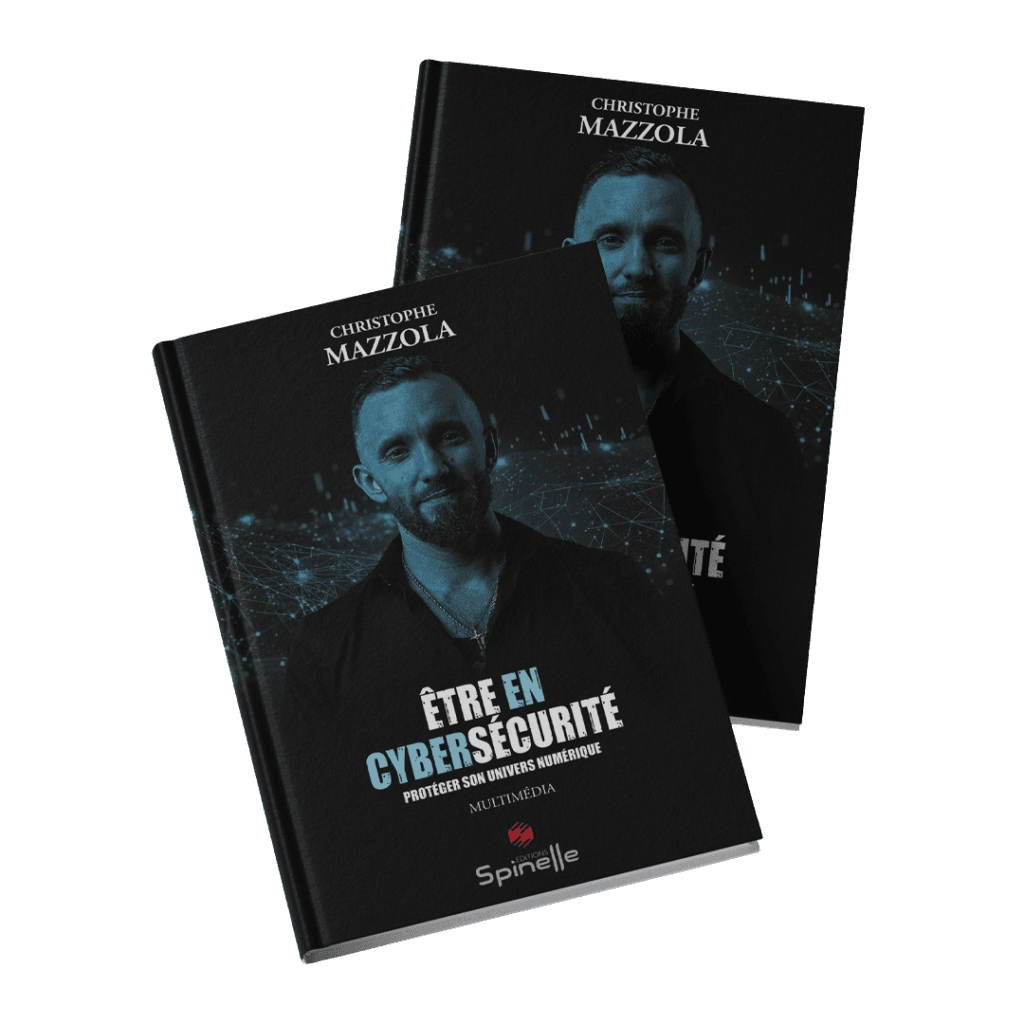
Être en cybersécurité
Une feuille de route cyber en clair, pour tout le monde, pas seulement les experts.