AI doesn't replace us, it weakens us... if we let it
What if AI didn't make us stupid... but forced us to become smarter?
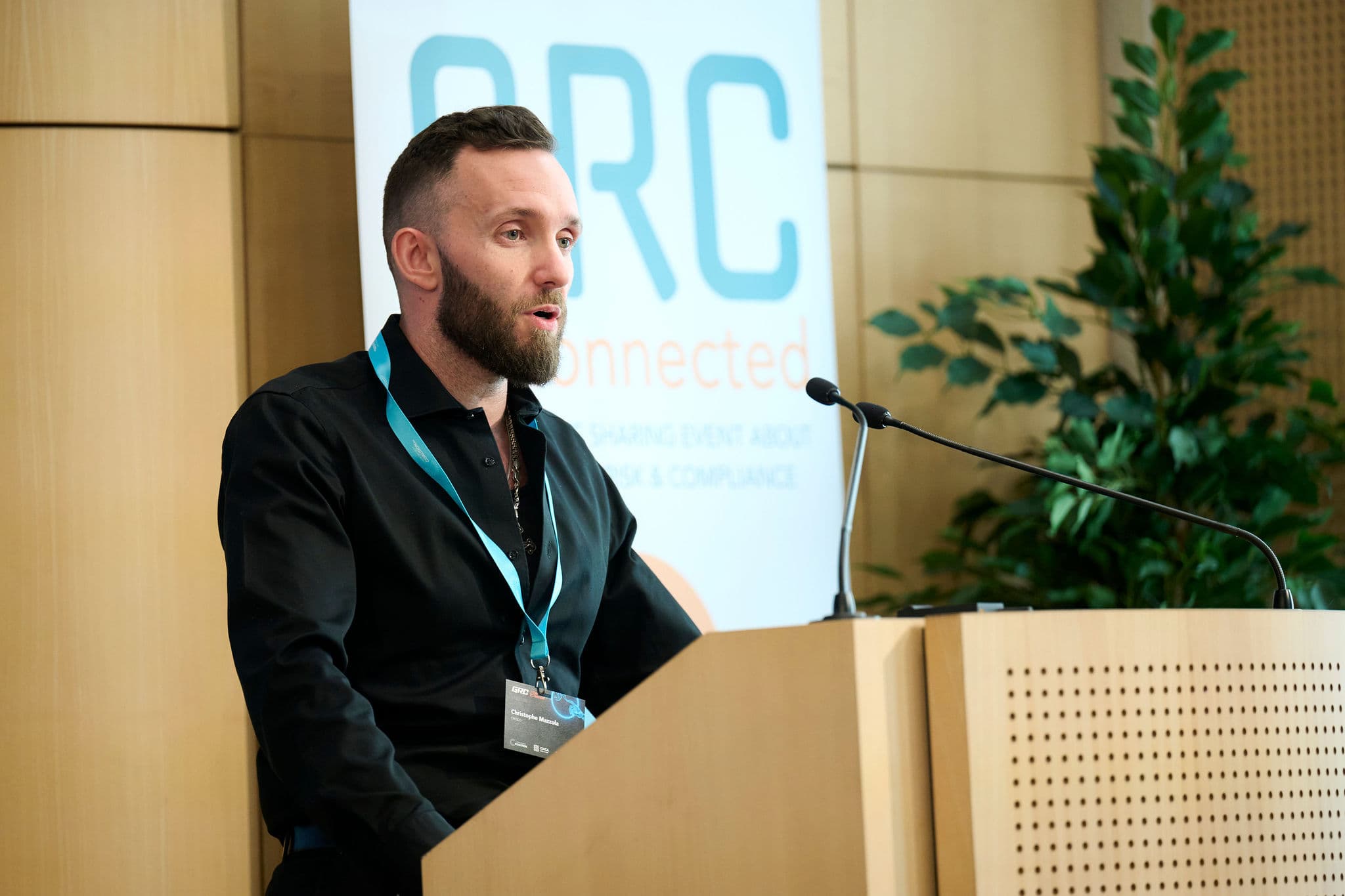
Last March, during my talk at the Belgium Cyber Security Coalition, I asked a simple but unsettling question:
What if AI didn't make us stupid... but forced us to become smarter?
Six months later, an MIT study proves me right. In black and white. Brain wired up. Measured evidence.
The Brain On LLM project, led by a team of researchers, has just demonstrated what I've been hammering home for months: AI is not neutral. It shapes the way we think, learn, remember and create.
And if we don't use it consciously, it gradually turns us into mere consumers of generated text.
AI, a cognitive mirror... and sometimes an anaesthetic
The study is fascinating. It compares three groups:
- Those who write on their own (Brain-only),
- Those who use a search engine (Search),
- And those who write with the help of a large language model (LLM such as ChatGPT).
The results are clear:
-
🧠 The Brain-only group had the most activated brain networks, the richest connections, the sharpest memory.
-
🔍 The Search users had an intermediate level: taxed, but still cognitively engaged.
-
🤖 The LLM users showed the lowest brain activity. Fewer connections. Less memory. Less sense of ownership over the content.
Worse still: the people who had used AI over several sessions then struggled to recover their abilities when they had to write on their own. Their brain had... got used to it. Switched off
I talked about this in March: AI as an intellectual prosthesis
Earlier this year I was explaining that AI is a tool for augmentation, not substitution.
But the temptation is strong: why push yourself when you can click? Why think when a machine can churn out an "acceptable" piece of text?
This is the escalator syndrome:
the vast majority of people take the escalator, a minority take the stairs.
The escalator means a little comfort right now, a lot of weakness tomorrow.
The stairs mean a little pain now, but far more strength tomorrow.
AI is today the biggest cognitive escalator of our time.
And in a world that prizes speed over depth, the result is predictable: we become less attentive, less critical, less creative.
Read. Write. Debate. The 3 pillars of intellectual sovereignty
I've said it, and I'll say it again: AI does not destroy critical thinking. We destroy it ourselves, through surrender.
If you want to stay relevant, powerful, strategic in this world transformed by AI, you don't need to flee the technology.
You have to frame it with strong human practices:
- Read: to feed your mind, cross-reference ideas, confront complexity.
- Write: to structure your thinking, step back, create meaning.
- Debate: to sharpen your vision, listen, respond, rise higher.
These are training exercises. Disciplines. Like sport for the body, they are the bare minimum for the brain.
AI is a magnifying glass, not a brain
What Brain On LLM shows precisely is that LLMs are not artificial intelligence in the strict sense.
They are amplifiers of our mental routines. They pick up our ways of speaking, our dominant ideas, our biases, and recycle them. Fast. Well. Without a soul.
So no, this is not "man or machine".
It's man AND machine, on condition that man stays in control, and that the machine serves to push us further, not to lull us to sleep.
MIT confirms it, but the responsibility is ours
MIT put an electroencephalogram on the question.
I had put my intuition, my experience, and my deep conviction on it:
AI is our mirror. If you become lazy, it amplifies your laziness. If you stay engaged, it amplifies your power.
The choice is always in our hands.
The technology is not the problem.
Our relationship with effort is.
So ask yourself the question: do you want the escalator... or the stairs?
Questions fréquentes
What does MIT's Brain On LLM study show?
It compares those who write on their own, those who use a search engine and those who rely on a large language model. LLM users display the lowest brain activity, the fewest neural connections and the least retention and ownership of the content.
Is AI destroying critical thinking?
According to the author, AI is not destroying critical thinking: we are the ones destroying it through surrender. The technology is not the problem; our relationship with effort is.
How do you stay intellectually sovereign in the face of AI?
By framing the use of AI with three strong human practices: reading to feed the mind, writing to structure thought, and debating to sharpen your vision.
What does the escalator syndrome mean?
The escalator offers immediate comfort but weakens you in the long run, while the stairs demand effort now but build lasting strength. AI is presented as the biggest cognitive escalator of our time.
Sources & méthodologie
- Étude « Your Brain on ChatGPT » (projet Brain On LLM), MIT Media Lab
- Conférence de l'auteur à la Belgium Cyber Security Coalition (mars 2025)

L’auteur
Christophe MazzolaJ’écris sur la cybersécurité telle qu’elle se vit vraiment : gouvernance, facteur humain, et tout ce que les rapports d’audit n’osent pas dire au COMEX. Auteur de « Être en cybersécurité ».

Être en cybersécurité
Une feuille de route cyber en clair, pour tout le monde, pas seulement les experts.