When the internet coughs, everyone catches a cold: why the Cloudflare outage concerns us all
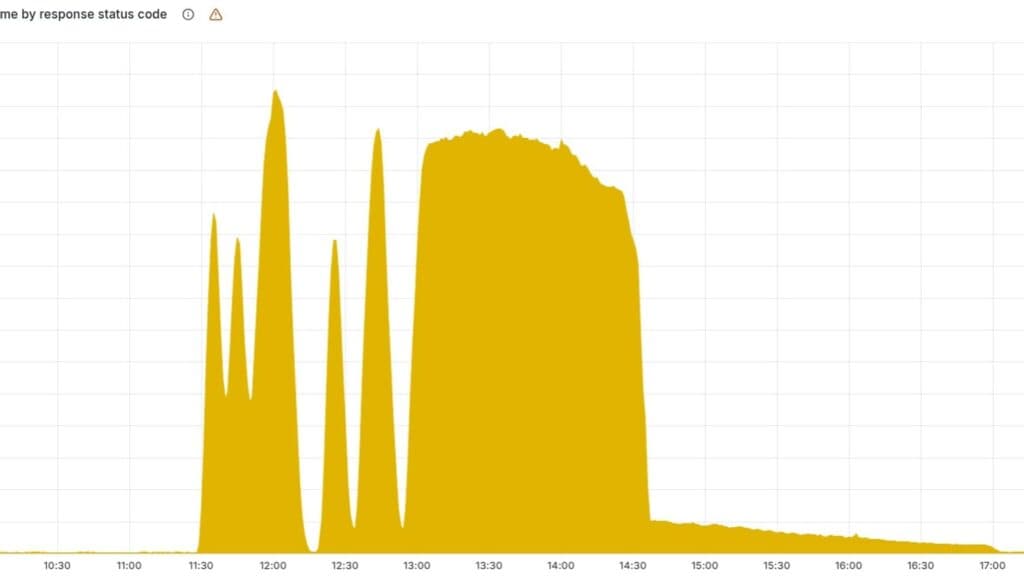
On 18 November 2025, millions of users watched their digital services slow down, crash, or become unreachable. X, ChatGPT, Instagram, Canva, many banking and e-commerce services... all hit. The cause?

On 18 November 2025, millions of users watched their digital services slow down, crash, or become unreachable. X, ChatGPT, Instagram, Canva, many banking and e-commerce services... all hit.
The cause? An outage at Cloudflare, a key player in the infrastructure of the global web.
A bug? An isolated incident? A run-of-the-mill technical problem?
No. A weak signal. A warning. A real-time demonstration of the systemic fragility of today's digital ecosystem.
Who is Cloudflare? And why so much impact?
Cloudflare is what is known as a CDN (a content delivery network) but also a security and performance provider for millions of websites.
Put simply: it acts as a smart pipe between your device and the services you use.
- It optimises speed.
- It filters attacks.
- It balances loads.
- And above all, it handles millions of requests every second for a significant share of the web.
In other words: when Cloudflare goes down, it is not one site that is affected, it is hundreds of thousands, directly or indirectly.
What this outage really reveals
- The concentration of the web's infrastructure We wanted to believe the internet was decentralised. In reality, it rests on a few central nodes - Cloudflare, AWS, Google Cloud... A handful of players host, protect and orchestrate almost all of our digital life.
- The invisible fragility of digital services For users, the internet works... until the day it no longer works. We get outraged, then we forget. Yet, behind the apparent smoothness, there are layers of infrastructure that few understand, few monitor, and even fewer control.
- The illusion of technical control When a failure at an external player can freeze an entire part of your operations, you are no longer sovereign. You are the tenant of a network you do not understand. And the lease can be terminated at any moment.,
Raising the debate: from the bug to sovereignty
No, this is not "just an outage".
It is a question of economic and strategic security.
When a company, a local authority or a state depends on digital services to operate - and those services rest on single, opaque or distant providers - then sovereignty is nothing more than a word.
And cybersecurity is no longer a matter of firewalls, but a matter of mapping dependencies.
A few concrete leads to rethink our relationship with the digital world
- Diversify providers Do not put all your eggs in one basket. Even if it is simpler. Even if it is cheaper.
- Demand transparency The critical players of the web must publicly account for their resilience, their incidents, their continuity policies.
- Teach infrastructure, not just tools Schools, businesses, decision-makers: it is time to understand how the web works. Because you cannot protect what you do not understand.
- Take on a discourse of digital maturity Yes, performance matters. But robustness matters more. Better a service that slows down temporarily than an entire ecosystem that collapses.

A shared responsibility
Users have the right to demand accountability.
Companies have the duty to anticipate.
And public authorities have the responsibility to set limits on systemic dependency.
This November outage is a small warning.
Tomorrow, it could be a more serious outage, or a malicious attack.
The result will be the same if we do nothing: a loss of trust, a loss of control, and a loss of resilience.
The digital world is not just a technology. It is a vital infrastructure. And like any infrastructure, it must be designed to withstand - not just to function.
The Cloudflare bug reminds us of one essential thing: a digital world without a resilience strategy is a house of cards.
However powerful, connected and modern it may be.
Questions fréquentes
What happened during the Cloudflare outage of 18 November 2025?
An outage at Cloudflare made millions of digital services slow, unstable or unreachable, including X, ChatGPT, Instagram, Canva as well as many banking and e-commerce services.
Why did an outage at Cloudflare have such an impact?
Cloudflare is both a CDN and a security and performance provider that handles millions of requests per second for a significant share of the web. When it goes down, it is not one but hundreds of thousands of sites that are affected, directly or indirectly.
How is this incident a question of sovereignty and not just a bug?
When a failure at an external player can freeze an entire part of your operations, the organisation is no longer sovereign: it depends on a network it neither understands nor controls. It is a matter of economic and strategic security.
How can this systemic dependency be reduced?
The article suggests diversifying providers, demanding transparency about resilience and incidents, teaching infrastructure rather than tools alone, and taking on a discourse of maturity that favours robustness over performance.
Sources & méthodologie

L’auteur
Christophe MazzolaJ’écris sur la cybersécurité telle qu’elle se vit vraiment : gouvernance, facteur humain, et tout ce que les rapports d’audit n’osent pas dire au COMEX. Auteur de « Être en cybersécurité ».

Être en cybersécurité
Une feuille de route cyber en clair, pour tout le monde, pas seulement les experts.