USB stick and state silence: digital complacency has struck again
Salah Abdeslam, convicted for the November 13 attacks, was taken into police custody for illegally possessing... a USB stick in prison.
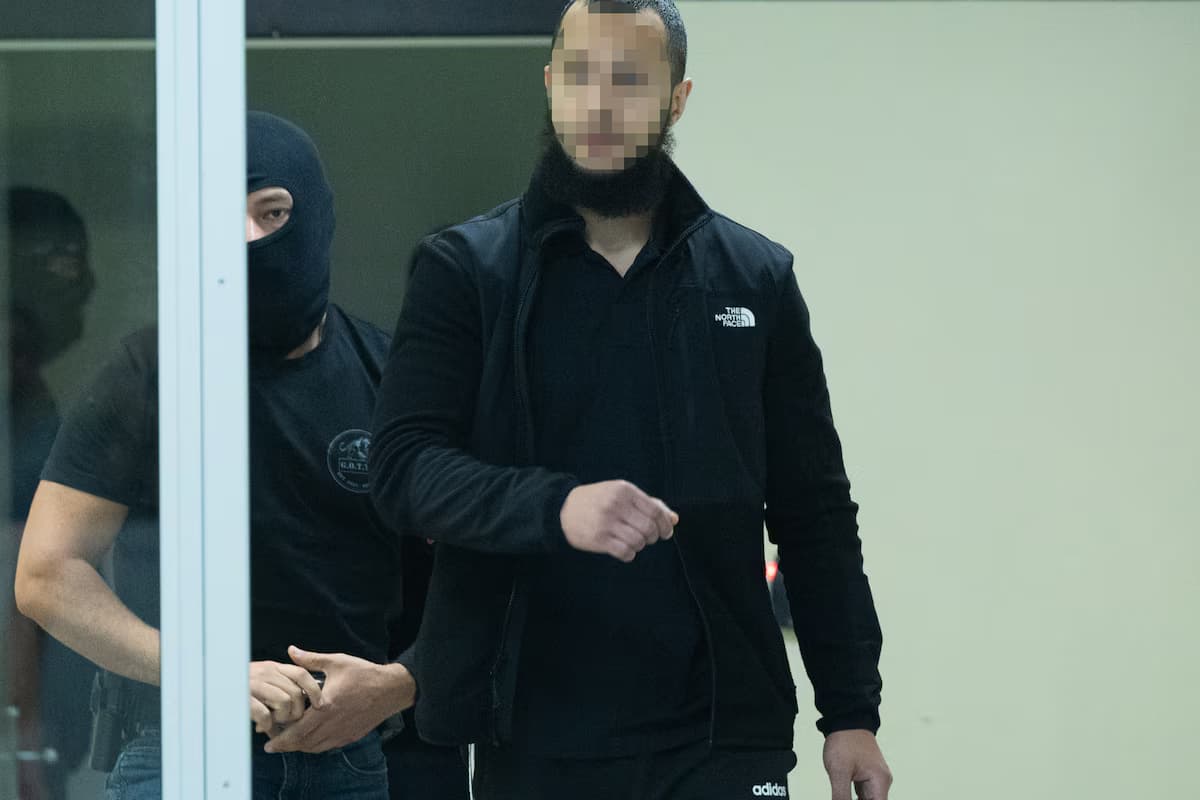
Salah Abdeslam, convicted for the November 13 attacks, was taken into police custody for illegally possessing... a USB stick in prison.
Let us say it out loud: the logistical mastermind of the worst attacks France has ever known could have accessed digital data, in prison, in 2025.
And no one found that shocking until we stumbled on it by accident.
Not one authority to anticipate it.
Not one system to prevent it.
Just improvisation, protocols that no one follows, and a recklessness that, in another country, would have triggered a wave of forced resignations.
The problem is not Abdeslam.
The problem is us.
He is under a "particularly closely watched" regime, and yet he can possess computer equipment, in a cell.
He can handle it.
He can plug a USB stick into it; or at any rate, he was able to.
But above all: he can benefit from the pervasive complacency.
Because France has a problem: it loves to pretend to secure things.
It puts procedures on display. It announces plans. It sets down words. But it does not do the work.
We monitor badly
We check after the fact.
We communicate a lot.
But we protect little.
And as always, the politicians rush to comment after the event, to reassure public opinion.
"Searches have been stepped up", "the system has been adapted", "sanctions will be taken"...
But the damage is already done: the fault does not lie in the incident, but in the acceptance that it could happen.
When a terrorist of this magnitude, held in a high-security wing, can handle forbidden objects, that is not a "slip-up".
It is a failure of the whole system.
Digital is also a weapon.
And we need to start treating it seriously.
We keep thinking of security as a lock on a door.
But in 2025, weapons no longer always make noise.
They circulate on sticks. In files. Through encrypted messages. Through invisible instructions.
Technology is no longer an option.
It is a territory.
And we are leaving the borders open.
**
This is not a story about hackers.**
It is a story about a system with no backbone.
We treat serious matters with a technocratic breeziness.
We spend millions on "cybersecurity plans" that no one reads.
We create committees.
We make PowerPoints.
But when it comes to acting, monitoring, owning the discipline, we give up.
There is no resilience without rigor.
There is no security without discipline.
And there is no serious public policy without a minimum of consistency.
If France still wants to call itself a modern digital democracy, it must stop believing that it can outsource rigor.
Security cannot be delegated.
It is enforced, every day, in every gesture, in every flaw we refuse to tolerate.
And at a time when we are about to commemorate the 10th anniversary of the November 13 attacks, what remains?
A terrorist in prison.
And a country that, quite plainly, still has not understood.
Reclaiming the meaning of the word "security"
The solution is not digital. It is moral, political, structural.
The problem is not the USB stick, but the fact that a man like Salah Abdeslam can still get anywhere near one.
An individual who took part in the worst mass killing on French soil since the war has no business enjoying comfort or technological learning.
No screen. No access. No contact.
Not even the chance to look at a computer, still less to use one.
The right to rehabilitation cannot be a totem of moral impunity.
Society does not protect itself by re-educating those who set out to destroy it, but by guaranteeing that they can never threaten it again.
Maximum-risk detention must be redefined: zero contact with the outside world, zero privilege, zero indulgence.
Not out of vengeance, but out of consistency.
Because you cannot commemorate victims on one side, and hand a keyboard to their executioner on the other.
Security is first and foremost this: the political courage to say that certain rights end where the memory of the innocent begins.
Questions fréquentes
What exactly does the article hold against the Salah Abdeslam situation?
That an inmate under a particularly close surveillance regime, convicted for the November 13 attacks, could possess and handle computer equipment and a USB stick in prison in 2025, without any authority having anticipated it.
According to the author, where does the real problem lie?
Not in the individual but in the system: a pervasive complacency that consists of pretending to secure things, putting procedures on display, multiplying plans and committees, without doing the real work of surveillance and protection.
Why speak of digital as a weapon?
Because in 2025 threats no longer make noise: they circulate on sticks, in files and in encrypted messages. Treating security as a simple lock on a door amounts to leaving the borders open.
What solution does the author propose?
A moral, political and structural response rather than a technical one: redefining maximum-risk detention around zero contact, zero privilege and zero technological access, without confusing the right to rehabilitation with impunity.
Sources & méthodologie
L’auteur
Christophe MazzolaJ’écris sur la cybersécurité telle qu’elle se vit vraiment : gouvernance, facteur humain, et tout ce que les rapports d’audit n’osent pas dire au COMEX. Auteur de « Être en cybersécurité ».
Être en cybersécurité
Une feuille de route cyber en clair, pour tout le monde, pas seulement les experts.