When Naive Environmentalism Becomes a Strategic Vulnerability
Norway has just made an explosive discovery: 850 electric buses running in Oslo can be stopped remotely by their Chinese manufacturer.
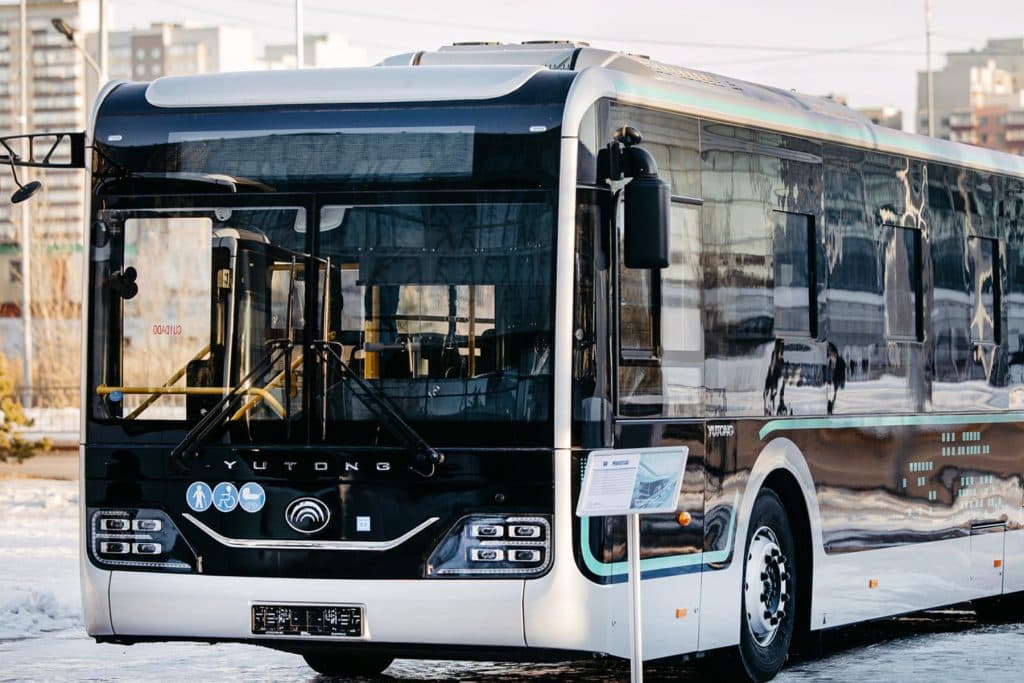
Norway has just made an explosive discovery: 850 electric buses running in Oslo can be stopped remotely by their Chinese manufacturer, Yutong. A bit of software access, a built-in SIM module, and a foreign player can, in theory, shut down an entire public transit fleet in a European capital.
Is this serious? Yes.
But it is no surprise.
It is the direct consequence of a system that wants energy sovereignty without industrial sovereignty.
Of a European model that demands flawless emissions standards while forcing its states to source from those who respect nothing but their own interests.
The green dream that manufactures dependency
Since January 2025, Norway has required that all new buses (coaches excepted) be emission-free.
On paper, it's magnificent.
In practice, it translates into massive imports of Chinese equipment. Why? Because in Europe, we have abandoned industrial ambition, the supply chains are broken, and the few remaining manufacturers cannot compete on volume or price.
The result? We offshore production.
And, out of naivety or cynicism, we let onto our roads technical systems that can be steered remotely by an authoritarian regime.
The question is no longer whether a hacker can immobilize a bus: it is why a foreign government had that capability in the first place.
Going all-digital is a prison
We can debate for hours about firewalls, audits, the SIM cards we'll pull out by hand...
But the heart of the problem is elsewhere: it's the obsession with connecting everything, with everything modern, everything digital.
Every "smart feature" we add is a new door opened to interference, a new dependency we accept.
And this time, it isn't a bug. It's a policy.
Because this kind of remote access is not an accidental flaw.
It is an architectural choice, deliberate, documented, planned.
And if it is there, it is because Europe wants modern buses but no longer wants to design them itself.
It wants green technologies, but no longer wants to have to produce the batteries, the chips or the control units.
Don't want to depend on a foreign power anymore?
Then become self-reliant again.
A country that cannot build its own vehicles, its own networks, its own tools, is not a sovereign country.
It can sign every treaty in the world, congratulate itself on its standards and pile up conferences on "cybersecurity": it stays vulnerable the moment an outside player decides to make it pay for its naivety.
The only durable solution is not a software patch.
It is not an expert committee.
It is reshoring. Mastery. Reconquest.
Because you cannot legislate on a bus's carbon emissions while refusing to take charge of the means to produce it.
And above all, you cannot, in the name of the ecological transition, hand yourself over to powers that turn technology exports into a strategic weapon.
It's time to choose
Either we want digital and sustainable infrastructure that is under our control, and we have to rebuild supply chains.
Or we keep making laws in committee rooms without producing a single bolt, and there will be no point crying the day Beijing unplugs Oslo.
This is not cybersecurity.
It is security plain and simple.
And at this game, Yutong's engineers are more consistent than our ministers.
Rethinking public procurement, reviving strategic industry
If Europe wants to break this dependency, it must fundamentally reform the way it thinks about and buys technology. Today, public procurement favors cost and short-term compliance with environmental standards.
The result: we sacrifice strategic autonomy on the altar of "lowest-bidder" tenders. The specifications have to change.
Factor in sovereignty, resilience, component traceability. Reward European offers, even if they are 15 % more expensive. Because that difference is not an overcost: it is the price of our freedom.
And you do not rebuild a sovereign industry by stacking up labels, but by investing, training and owning our choices. Producing a 100 % European, emission-free bus is possible (and it may even already be the case?).
We just have to demand it. Responsible digital starts with political responsibility. And for now, that responsibility is nowhere to be found.
Questions fréquentes
Why can Oslo's electric buses be stopped remotely?
Yutong buses include software access and a SIM module that let the Chinese manufacturer act on the fleet remotely. It is a deliberate, planned architectural choice, not an accidental bug.
Why does Norway import Chinese equipment?
Since January 2025, Norway has required that all new buses (coaches excepted) be emission-free. With no European industrial ambition and no manufacturers able to compete on volume and price, this translates into massive imports of Chinese equipment.
What is the real nature of the problem according to the article?
It is not a question of cybersecurity in the technical sense, but of security plain and simple: the obsession with connecting everything and the abandonment of industrial production create dependencies on powers that turn technology exports into a strategic weapon.
What solution does the author propose?
Reshoring and industrial reconquest rather than a software fix: rebuild supply chains, and reform public procurement to reward European offers even 15 % more expensive, factoring in sovereignty, resilience and traceability.
Sources & méthodologie
- Ruter (opérateur de transport public d'Oslo), communiqué officiel,
- Euronews, bus chinois arrêtables à distance en Norvège,
- NBC News, Danemark/Norvège enquêtent sur la faille des bus chinois Yutong,
- Sustainable Bus, réponse de Yutong (contrôle distant des systèmes critiques impossible),
- European Alternative Fuels Observatory (Commission européenne), Norvège : achats de bus urbains zéro émission obligatoires dès 2025,

L’auteur
Christophe MazzolaJ’écris sur la cybersécurité telle qu’elle se vit vraiment : gouvernance, facteur humain, et tout ce que les rapports d’audit n’osent pas dire au COMEX. Auteur de « Être en cybersécurité ».
Être en cybersécurité
Une feuille de route cyber en clair, pour tout le monde, pas seulement les experts.